Friday, December 17, 2021

My favorite games of 2021

Although I played a lot of games in 2021, only about half of them were actually released this year. And even then, most were far from the AAA efforts that tend to fill similar GOTY write-ups. 

Still, I hope those who read this post will enjoy the thoughts I share below on what I consider to be my favorite games of 2021.

Something to consider as you scroll: I've sadly yet to experience a good handful of 2021 releases that I expect would've made this list had I gotten around to playing them. Among the games in question: Fuga: Melodies of Steel, The Great Ace Attorney ChroniclesNEO: The World Ends with You, Undernauts: Labyrinth of Yomi, and Voice of Cards.
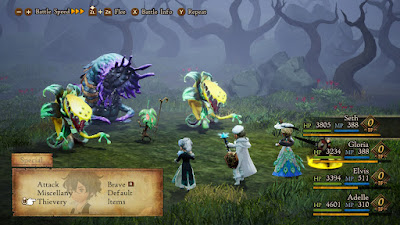

Bravely Default II (PC/Switch)

You're probably already aware that the character models in this Bravely Default sequel are less visually appealing than their counterparts in the original. Bravely Default II's soundtrack doesn't hit the same highs as the previous game's either. 

Even so, I found Bravely Default II to be enormously compelling. The claymation-inspired, diorama-esque world is a joy to race around, and its battles exist somewhere within the same exhilarating realm as those found in the first Bravely Default and the oft-similar Octopath Traveler.

The cherry on top of this sadly divisive RPG: the bonkers story, which becomes more and more compelling--not to mention bizarre--the deeper you delve into it.
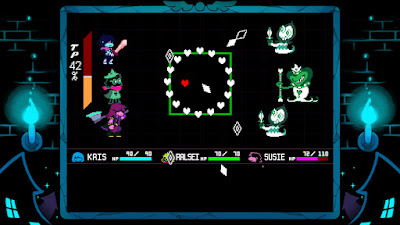

Deltarune Chapter 1&2 (PC/PS4/Switch)

I dragged my feet on plunging into the first two chapters of Deltarune until late this year because, frankly, I couldn't fathom how they'd even remotely reach Undertale's splendorous heights. Boy, was I wrong. I don't know that I could declare Deltarune chapters one and two to be better than the whole of Undertale, but I also wouldn't argue with anyone who makes such an assertion.

For me, the main area in which Deltarune bests its precursor is combat. Battles in Deltarune have more depth and are more strategic than those in Undertale. I also found them more fun, truth be told. I can't quite say the same about Deltarune's characters, story, or soundtrack. In particular, Queen and Lancer pale in comparison to their Undertale counterparts, Sans and Papyrus, though the former are by no means duds.

Whatever. All I know is I'm itching--desperately--to play Deltarune's remaining chapters, however many Toby Fox and crew decide to release into the world. For me, that makes the whole "which is better?" discussion moot. At least until the next time I play through Undertale (wink wink).
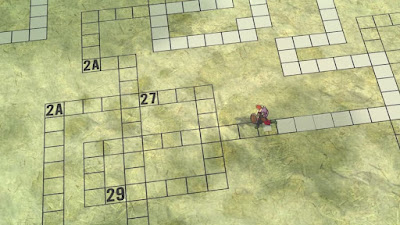

Dungeon Encounters (PC/PS4/Switch)

Dungeon Encounters offers up a terrible first impression, looking like one of Square Enix's lowest effort titles ever. Give it a whirl, though, and you're sure to realize, as I quickly did, it's a minimalistic Etrian Odyssey viewed from a decidely different perspective.

Even that sells this digital RPG short, though, as I enjoyed playing Dungeon Encounters more than I've enjoyed playing any Etrian Odyssey title to date. I also managed to finish Dungeon Encounters--something I've yet to do with Etrian Odyssey's many releases.

Why? The sense of mystery and exploration is strong in Dungeon Encounters. Not only do you map out floors of a dungeon, but you solve riddles to find new abilities, party members, treasures, and even the final boss. Also, the game practically begs you to break it in various ways. Once you've acquired certain abilities, you can jump around the 99-floor dungeon nearly at will. As you might expect, there's a risk-reward element to this play style, but that's yet another feather in Dungeon Encounters' cap.

All in all, if you're usually an RPG fan and you're up for tackling a tough one (though not unfairly so) that dares to stray from the norm, give serious consideration to Dungeon Encounters in 2022.
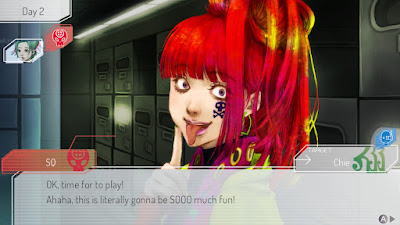

Gnosia (Switch)

Raging Loop was among my favorite games of 2020. One of the main reasons I loved Raging Loop so much was that it deftly blended aspects of the social-deduction game, Werewolf, into what is otherwise a spooky visual novel.

Gnosia also incorporates aspects of Werewolf into its gameplay. It's not a VN, though. Rather, it's more of a Werewolf simulator. The end result is every bit as gripping as you might expect if you've ever experienced Werewolf in some form or fashion. If you haven't, the gist here is that you're on a spaceship with a slew of extremely colorful characters (literally and figuratively) and you need to suss out which are Gnosia, alien-like creatures who will, without intervention, kill all humans aboard.

The thing is, you don't play through Gnosia just once. You play through it many, many times. A single loop may take as little as a few minutes or as long as a quarter-hour or more. While working your way through a particular loop, you'll regularly encounter event scenes that expand one or more characters' backstories. Only after you experience all of these scenes can you access Gnosia's true ending.

Really, though, the ending is the icing on this pixelated piece of cake. The real joy comes in the journey to that point--getting to know your crewmates, using what you glean there to your advantage (or their disadvantage), and figuring out what you need to move the overarching story toward its satisfying conclusion.
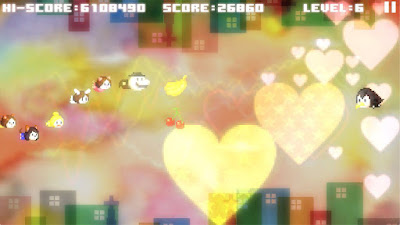

Mon Amour (PC/Switch)

After I played Onion Games' Mon Amour for the first time following its release, I thought, "this is cute, but I probably won't spend much time with it." I returned to it the next day, mostly to give it a quick second chance before moving on to something more my speed. Instead, I got wrapped up in its silly quest to rescue Princess Mona and her multitude of servants. I intended to only save a few of the latter, but by the time I'd done just that, I was hooked--or at least I was hooked enough to continue on rather than prematurely pull the plug on my Mon Amour adventure.

I'm so glad that happened. Because that's when I discovered there's more to this little gem than its Flappy Bird-ish gameplay, plethora of rescuable "mon-a-girls," and appropriately zany soundtrack. Notably, it's surprisingly strategic once you realize how your actions affect the playfield. With that knowledge in mind, you'll likely have as hard a time as I did putting down Mon Amour until you've saved every citizen, climbed the high-score list to an acceptable degree, or both.
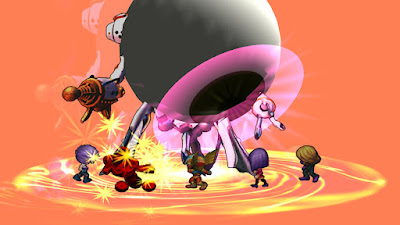

SaGa Frontier Remastered (Mobile/PC/PS4/Switch)

I've been enamored with SaGa Frontier since first laying eyes on Japanese screenshots of it in some old gaming magazine or other in advance of its late-1990s release. For me, it was far closer to what I wanted from Square Enix (then Squaresoft) during the 32-bit era than Final Fantasy VII was.

I'm even more appreciative of what SaGa Frontier brings to the table today, thanks to the fact that it's now portable and sports a cleaned-up--and thus less confusing--localization. As it always was, SaGa Frontier remains thrillingly exotic, with locales, characters and battles that inspire awe while also getting the eyes popping and blood flowing.

True, SaGa Frontier can be brutal, with death lingering around nearly every corner. But even that is a positive, in my mind--considering how common it is for battles in RPGs to feel yawn-inducingly superfluous.

Thursday, February 11, 2021

Captain Toad and chill (or, move over Animal Crossing, this is the relaxing game I want and need in these difficult times)

So many people found solace in Animal Crossing: New Horizons last year. I was not one of them.

I expected to be one of them, of course. Not only have I enjoyed every previous entry in the Animal Crossing series (with the possible exception of Wild World), but I've returned to the GameCube version at least five times since my first obsessive playthrough eons ago.

There's no point in me prattling on about why I didn't gel with Animal Crossing: New Horizons; all I'll say for now is that it felt too much like busywork this go around.

With New Horizons tossed into the bin as my go-to "chill game" for 2020, I set out to find a suitable replacement. A Short Hike could have been it but it was too, well, short. Moon seemed promising as well, but it was a bit too somber and emotional to fill this particular role.


I guess I should have known Captain Toad might fit the bill. Nintendo is well known for concocting such non-threatening offerings, after all. Still, I assumed it would be more like one of the company's three-dimensional Mario titles—generally mellow, but with a slight edge.

Although Captain Toad shows some teeth near the end, the bulk of the experience is the definition of relaxing. You, plopped into Toad's shiny little shoes (and, later, Toadette's), shuffle and waddle around each cuboid stage in search of three diamonds and a single gold star, the latter of which doubles as an exit.

There are coins to grab, too, as well as doors to unlock and open—even chunks of earth and brick to lower or raise.

Oh, and there are enemies! How could I forget them? You can pluck turnips out of the dirt and weaponize them against the game's adorable baddies, but you can also sneak by them.

That's probably why they momentarily slipped my mind; for the lion's share of my Captain Toad playthrough, I ignored the Shy Guys, Goombas, and Boos that sauntered around each level with me whenever possible.


Given that, I can't help but wonder why they're even there. Or why Nintendo's developers didn't allow players to flip a switch and remove them, if that's what they fancied.

Maybe the company's bigwigs demanded (or at least strongly suggested) that Captain Toad needed them to be considered a proper game? Or maybe they (or, more likely, the devs themselves) thought they might provide an entertaining distraction from the rest of this rather low-key adventure?

Whatever the case may be, the majority of Captain Toad has such a tranquil vibe that it shocked me—in the most pleasant of ways, of course.

Note, however, that I said "the majority of" Captain Toad is tranquil. For reasons I still can't quite comprehend, the game veers in a decidedly stressful direction just before its end credits.

We're not talking Dark Souls territory here, naturally, but things do get a lot tougher. I had several "sweaty palm" moments during this portion of the game, which confused and even annoyed me a tad.


Honestly, I wish the folks who made Captain Toad had saved these slightly more taxing stages for the post-game. 

I would've preferred the main campaign to be a fully laidback experience, rather than one that suddenly ramps up in intensity at the last second.

Oh, well, at least the best part of it proved to be perfectly chill. That's more than I can say about nearly every other game I've played in the last year, so I'll forgive this lone misstep.

Have you found any old or new games particularly relaxing in the last year? If so, please tell me about it in the comments section below.

Monday, February 08, 2021

Manual Stimulation: Alien Syndrome (Game Gear)

I don't know if I've made this clear here, on Twitter, on Facebook, or elsewhere on the internet, but I adore Alien and Aliens

I'm specifically talking about the classic horror and sci-fi films, of course; not the, uh, beings from outer space in general.


I mention that because it should go a long way toward explaining my attraction not only to the 1986 arcade version of this game, but the boiled-down Game Gear port from 1992 I'm highlighting in this post.

After all, there's little denying Alien Syndrome was heavily inspired by James Cameron's classic 1986 sci-fi action film, Aliens.


This isn't to imply Alien Syndrome offers nothing new or unique. The enemies and especially bosses it throws at players are a world away from the ones found in the aforementioned flick.


To be honest, the low-level aliens you fend off in this Gauntlet-esque, run-and-gun shooter tend toward the lackluster. Thankfully, the end-of-stage guardians more than make up for it.


This version of Alien Syndrome isn't a straight port of the quarter-munching original, by the way. According to the intro, the Game Gear version a follow-up set five years in the future.


I can't say that's immediately noticeable while playing the portable iteration, but it's a nice bullet point all the same. 


Something else that's worth noting about this release is its brevity. The game offers up just four stages. Successfully finishing them is no easy feat, though, so at least there's that. Still, few are going to describe Alien Syndrome for the Game Gear as a meaty experience.


Most who play it are likely to call it a tense and thrilling experience, though. It absolutely nails that aspect of the source material. As such, playing through it again and again—or at least more than once—is joyful rather than annoying.


Have any of you played the Game Gear port of Sega's Alien Syndrome? If so, what did you think of it?

Thursday, February 04, 2021

Manual Stimulation: Bubble Bobble (Game Gear)

The Sega Game Gear port of Bubble Bobble may be my favorite home version of Taito's arcade classic.

Which of course means it's also one of my favorite Game Gear titles.


In fact, I love Bubble Bobble for Game Gear so much that one of my "bucket list" wishes as a games writer is to interview the folks who developed it so I can learn why they made some of the intriguing design choices they made. 

(Seriously, if you know anyone who used to work for the now-defunct, South Korea-based Open Corp and you can put me in touch with them, please let me know.)


Why am I such a huge fan of this portable iteration of Bubble Bobble? The main reason is that its Bob, Bub, enemy, and item sprites are the usual size, but its backdrops look as though they've been zapped with a shrink ray.


The result is that this Bubble Bobble port gives off some serious Godzilla vibes. As in, Bub and Bob—as well as their enemy combatants—tower over the surrounding environment. It feels strange, yet also thrilling.


It alters the gameplay quite a bit, too, which I'm sure will irk some Bubble Bobble lifers to no end. Personally, I like how it switches things up—even if it does obliterate the few strategies I've developed for other, more traditional versions of the game over the years.


Anyway, enough about the game itself. This post is supposed to be about the instruction manual that was packed inside copies of this small-screened take on Taito's seminal classic, so let's talk about it.


If you scroll back up a bit, you'll see the Bubble Bobble Game Gear manual kicks off with a two-page comic. Sure, it employs an art style I'm not a huge fan of, but it's still pretty sweet—if short.


Sadly, this booklet isn't as crammed full of lovely illustrations as I think it should be. Still, it includes enough of them that you're unlikely to feel let down at the end. 

Monday, February 01, 2021

11 games I want to return to in 2021

Although I've focused almost entirely on playing "new to me" games—you know, ones I've never played before, like the 11 games I highlighted in my previous post—over the last few years, in 2021 I'd like to return to a handful I put some time into previously.

The following games are the first that came to mind when I started this little exercise a couple of weeks ago. Will I actually circle back to all of them by the end of this year? Your guess is as good as mine. I'll give it my best shot, though, that much I can promise you.


ClaDun x2 (PSP)

I've had dungeon-crawlers on the brain the last few months, so I guess it shouldn't surprise me that this peculiar example of the genre popped into my head as a possible replay contender this year. One of the main reasons I'm thinking of revisiting it is that, while I recall enjoying both the first ClaDun and this 2011 sequel, I can't remember much else about them. Also, both are easily accessible via my sadly ignored Vita, so giving the latter a second chance in 2021 would allow me to spend some quality time with both of Sony's handhelds, in a manner of speaking.

Dillon’s Dead-Heat Breakers (3DS)

I put more than seven hours into this weird Dillon's Rolling Western sequel-slash-spinoff a couple years ago. The funny thing is, I only half-enjoyed the time I spent with it then. I found the grungy, post-apocalyptic setting fascinating and the high-speed race-battles exhilarating, but I also found the overall gameplay loop disappointingly repetitive. Here's hoping the former aspects far outweigh the latter one when I return to it (and maybe restart it) sometime soon.

Final Fantasy Tactics Advance (GameBoy Advance)

I played through and thoroughly enjoyed Final Fantasy Tactics A2 in 2019. I did this despite the fact that I had yet to play its predecessor. Why? To be frank, I wasn't up for playing a game on my GB Micro or DS Lite at the time. Playing Tactics A2 on my trusty 3DS seemed miles more appealing. Considering how much I adored A2, though, I feel it's imperative that I get off my butt and check out the original FFT Advance ASAP—and that's exactly what I'll attempt to do over the next few months.


Half-Minute Hero (PSP)

Here's another PSP game that I remember playing at least a little of sometime in the past but can barely recall any details. Other than it looking great and offering up a curious variety of gameplay styles, I mean. So, I'd say it's ripe for a second—and more extensive—look, wouldn't you agree?

The Legend of Zelda: Breath of the Wild (Switch)

I have a surprisingly spotty history with The Legend of Zelda series. Although I completed the first game and A Link to the Past and believe both to be unquestionable classics, I've struggled to finish the numerous sequels that followed in their footsteps. Breath of the Wild is a different beast, which I discovered when I put about 10 hours into it back in 2017 and 2018, but that wasn't enough to keep me from drifting away from it eventually. I'll try to combat that should I succeed in circling back to it in 2021.

Loco Roco (PSP)

Loco Roco seems like one of those games that would be my cup of tea. Yet I've only ever played a few minutes of it. I'm sure most of the blame for that can be aimed at my general lack of interest in the PSP when it was still lighting up the sales charts. Well, I'm much more open to Sony's first handheld these days, plus I have a feeling Loco Roco's length will fit right in with my current interest in games that don't take long to finish.


Lord of Magna (3DS)

I bought Lord of Magna some time ago with high-ish expectations. Its cute-colorful aesthetic appealed to me, as did its bowling-esque battles. Or at least its battles intrigued me—to be honest, I wasn't sure I'd find them enjoyable. I did, though, which makes me wonder why I walked away from it after devoting just a couple of hours to it last year. I guess I'll find out if and when I return to it this year.

Monster Hunter Stories (3DS)

Part of me is nervous about returning to Monster Hunter Stories in 2021. The reason: a sequel that looks to improve on the original in every way is set to be released for the Switch this summer. And as a recent post of mine makes clear, the Switch is my preferred place to play games these days. Plus, I don't want to risk the original burning me out on the formula before I get to the sequel. Given all that, it might be wise to consider this the most "possibly maybe" entry on this list.

My World, My Way (DS)

Unlike most of the other aborted games highlighted here, I have no problem recalling why I failed to finish My World, My Way when I first started through it in 2015. You see, I played it as part of a short-lived series I called "A Decade of DS," which involved me spending a week with a game and writing a blog post about my experience with it before quickly moving on to another title. I always meant to come back to this odd, Atlus-published (in North America) RPG at a later date, but never did. So, I'll try to make a point of it in 2021.


Sakuna: Of Rice and Ruin (Switch)

Like a lot of folks, I snapped up a copy of this indie darling as soon as I could last fall. I promptly booted it up, put about an hour into it... and then dropped it in favor of another game. (Paper Mario: The Origami King, I think?) I didn't drop it because I hated it, mind you. I just wasn't in the mood for a side-scrolling hack-and-slash title at that moment—even one with a rice-harvesting component. I'm confident I'll be more keen on such an endeavor when I boot it up again in the near future.

World of Final Fantasy Maxima (Switch)

I had a blast with World of Final Fantasy Maxima while playing it for a little over 26 hours two years ago. It can be odd and even ugly, but overall I found it to be refreshingly unique and addictive. As is too often the case for me, though, a vacation stole my attention from it, and after I returned home, rejoining its convoluted story daunted me. Normally I'd just start over, but there's no guarantee doing so would produce a different result. As such, I'm planning to grit my teeth and force myself back into Maxima's world. I can always turn to GameFAQs or YouTube if I find myself helplessly lost.